A gate does more than close off a driveway. It establishes the first line of security, frames the architecture behind it, and sets expectations before anyone reaches the front door. Custom wrought iron gates give residential and commercial properties a presence that lightweight, off-the-shelf systems rarely achieve – especially when they are designed around the actual site, opening width, slope, and daily use.
For homeowners, the right gate can make a renovation feel complete. For developers, builders, and business owners, it can provide controlled access without sacrificing the visual standard of the property. The difference lies in precision fabrication, properly specified materials, and installation that accounts for real operating conditions rather than an idealized drawing.
Why Custom Wrought Iron Gates Remain a Strong Choice
Wrought iron has long been associated with decorative entrances, but modern gate fabrication is far more flexible than traditional scrollwork alone. A custom design can be clean-lined and architectural, with horizontal bars, geometric details, laser-cut infill panels, or a more classic ornamental pattern. The structure is built to suit the building, rather than asking the building to suit a standard gate size.
Security is a major reason clients choose steel-based gates. A well-fabricated gate uses a rigid frame, correctly spaced vertical or horizontal members, durable hinges or trackless hardware, and reliable locking points. It creates a meaningful physical barrier while maintaining visibility where needed. This is particularly useful for landed homes, guarded developments, warehouses, factories, and commercial compounds where access needs to be controlled every day.
There is also a longevity advantage. Quality metalwork can be repaired, refinished, and upgraded over time. A damaged panel or worn hinge does not necessarily require replacing the entire entrance system. That said, durability depends on more than the metal itself. Weld quality, drainage, coating preparation, hardware selection, and accurate alignment all affect how a gate performs after years of opening and closing.
Design the Gate Around the Property, Not a Catalog
The most successful gates feel proportionate to the façade and practical for the driveway. A narrow frontage may benefit from a single swing gate or a compact sliding configuration. A wide entrance might call for a double-leaf swing gate, a cantilever sliding system, or a trackless gate designed for clear vehicle access.
A gate that looks impressive on a large detached home can overwhelm a terrace house if its bars, panels, or decorative elements are too heavy. Conversely, a very minimal design may look underbuilt when installed at the entrance of a larger residence or industrial property. The frame depth, infill pattern, opening height, and post design should work as one composition.
Contemporary, Classic, and Privacy-Focused Styles
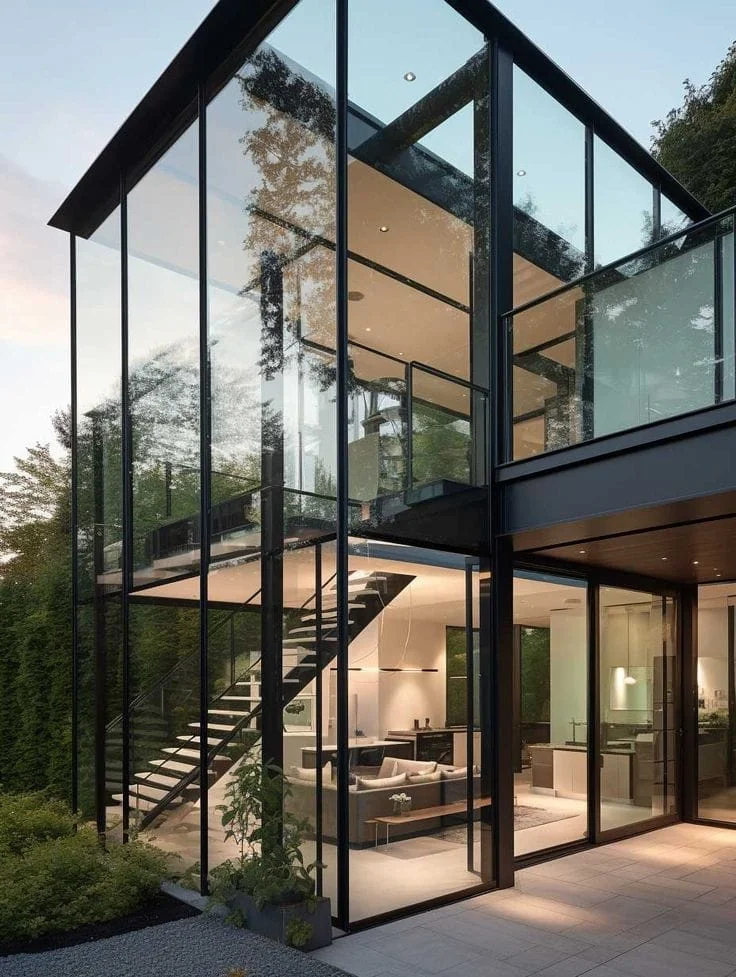
Modern properties often use slim rectangular profiles, horizontal lines, perforated metal, or laser-cut feature panels. These designs can be paired with aluminum louvers, glass railings, ACP awnings, or slim-profile doors to create a coordinated exterior. The result is a sharper, more contemporary front elevation without losing the strength expected from steel fabrication.
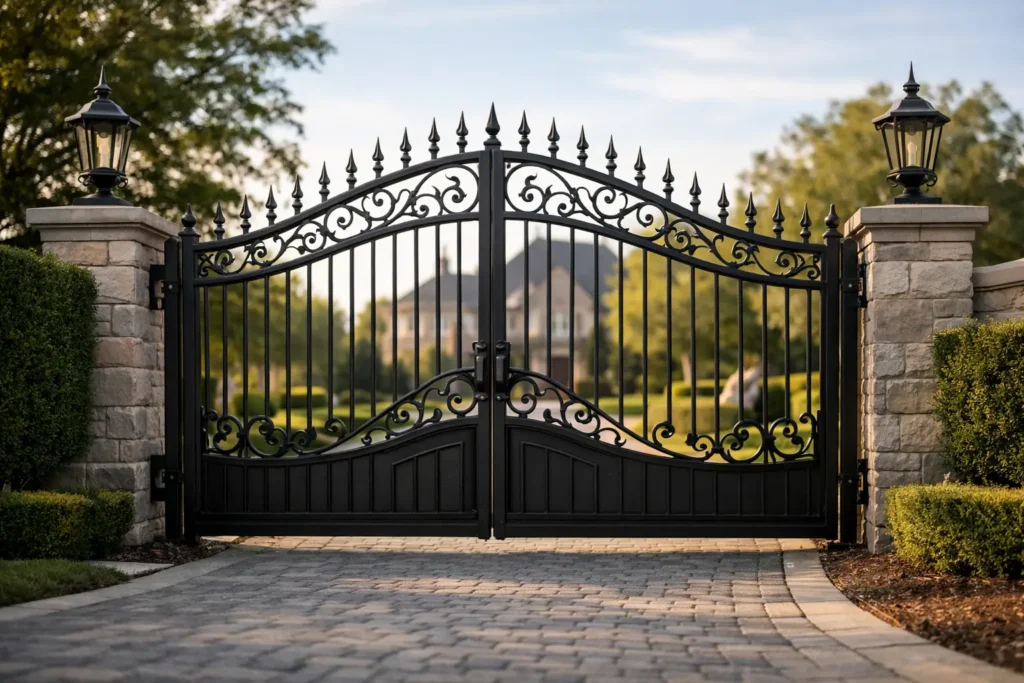
Classic designs remain a strong fit for homes with decorative columns, stone cladding, arched details, or more traditional landscaping. Curved top rails, forged-style motifs, spear tips, and ornamental scrolls can introduce character, but restraint matters. The design should complement the architecture, not compete with it.
Privacy is another key decision. Open-bar designs allow airflow and sightlines, while solid or semi-solid infill reduces direct views into parking and living areas. There is a trade-off: more privacy can mean a visually heavier gate and greater wind load. For exposed locations, the frame, posts, and automation system must be specified to carry that additional force safely.
Choosing the Right Gate Operation
Gate style and gate operation should be decided together. Retrofitting automation after fabrication is possible in some cases, but it is better to plan the system from the beginning. Motor position, power supply, safety devices, stopping points, ground clearance, and access controls should all be considered before the gate is installed.
Swing gates offer a formal appearance and work well when there is sufficient clear space inside the property. They need careful hinge alignment and a stable support structure. On sloped driveways, the direction of swing and clearance beneath the gate require extra attention.
Sliding gates are practical where driveway depth is limited, but they need room along one side for the gate to travel. Conventional tracked systems can be dependable when the track is properly installed and kept free of debris. Trackless or cantilever-style systems avoid a ground track, which can be attractive for driveways affected by leaves, dust, or heavy rain. However, these systems require a stronger counterbalance section and precise engineering.
For high-use commercial entrances, the duty cycle matters. A residential motor may not be suitable for a factory entrance that opens repeatedly throughout the day. Vehicle volume, gate weight, operating speed, emergency release, and access control requirements should guide the specification.
Materials and Finishes for Tropical Conditions
In Malaysia’s heat, rainfall, and humidity, a gate finish is not simply cosmetic. Moisture can enter poorly prepared welds, corners, or cut edges, leading to corrosion beneath the surface coating. This is why surface preparation and coating systems deserve the same attention as the design.
Steel gates are commonly finished with protective paint systems or powder coating, depending on the project requirement. Dark charcoal, black, bronze, gray, and textured finishes remain popular because they suit contemporary façades and hide everyday dust better than very light colors. PVD-coated stainless-steel details can also be introduced as accents for a more premium entrance composition.
No finish is completely maintenance-free. Gates near busy roads, coastal exposure, or dense landscaping may need more regular cleaning. Drainage points should remain clear, and moving hardware should be inspected periodically. Early touch-up of chips or scratches is far easier than allowing corrosion to spread beneath a coating.
What Precision Fabrication Changes
A gate can have an attractive drawing and still perform poorly if fabrication tolerances are ignored. Frames must be square, members properly braced, welds clean, and load-bearing points reinforced. The gate also needs to be measured against actual site conditions, including pillar position, driveway level, existing drains, wall finishes, and overhead constraints.
Professional installation is where the system becomes reliable. Even a small misalignment can cause scraping, sagging, uneven gaps, noisy movement, or extra strain on an automated motor. Properly set hinges, rollers, stops, guide brackets, and posts allow the gate to move smoothly and maintain its appearance over time.
For projects combining gates with fencing, railings, awnings, aluminum windows, or a new shopfront, coordinating the metalwork under one specialist helps protect visual consistency. Profile sizes, finish tones, panel patterns, and installation sequencing can be aligned rather than decided by separate vendors with separate assumptions.
Plan Before You Request a Quote
A useful gate quotation starts with clear site information. The fabricator should understand the opening width and height, preferred operation, driveway slope, available side clearance, level of privacy required, and whether automation is included. Photos of the existing frontage and nearby utility points also help identify issues early.
Budget should be discussed honestly because the cost is shaped by more than the gate area. Heavy-duty framing, decorative complexity, automation, access controls, foundation work, site access, and finish specification can all change the final price. Factory-direct fabrication can offer better value, but the lowest initial price is not always the best choice if structural details or installation quality are reduced.
For homeowners and project teams in Puchong, Subang Jaya, Kuala Lumpur, and across the Klang Valley, Home Alloy Design & Engineering Work delivers made-to-order wrought iron gates with integrated fabrication and on-site installation. The goal is not just to supply a barrier, but to build an entrance that operates confidently, withstands local weather, and belongs with the architecture around it.
A well-designed gate should feel effortless after installation: aligned, secure, quiet in operation, and visually right every time you arrive home or open the property for business.