A railing is one of the first details people touch when entering a building and one of the few architectural elements expected to perform perfectly every day. The right steel railing must do more than look refined. It must guide movement safely, resist daily wear, suit the surrounding architecture, and remain stable through years of use. For homes, retail spaces, offices, and industrial facilities, a custom-fabricated solution turns this necessary safety feature into a defining design element.
Why Steel Railing Remains a Strong Architectural Choice
Steel offers a level of strength and design freedom that suits both minimal contemporary interiors and demanding commercial environments. Because steel has high structural capacity, a skilled fabricator can create slim, clean profiles without making the railing feel weak or temporary. This is especially valuable on staircases, balconies, mezzanine floors, corridors, roof decks, and entrance platforms where safety and visual openness need to work together.
Mild steel is often selected for custom stair railings, exterior fences, and heavier structural applications. It can be cut, welded, bent, and finished to suit almost any layout, including angled stair flights, curved landings, and irregular site conditions. Stainless steel is a premium alternative where corrosion resistance and a polished architectural finish are priorities, particularly around wet areas, swimming pools, coastal exposure, or high-traffic commercial settings.
The best material is not always the most expensive one. A powder-coated mild-steel railing may be the right solution for a covered internal staircase, while stainless steel may justify its higher initial cost in a humid exterior location. The correct specification depends on exposure, maintenance expectations, design intent, and how people will use the space.
Steel Railing Styles That Change the Look of a Space
A railing should be designed as part of the building, not added after the finishes are complete. The spacing, handrail shape, post size, and infill pattern all influence whether the finished result feels contemporary, industrial, classic, or visually heavy.
Horizontal and Vertical Bar Railings
Vertical bars remain a practical choice for staircases, balconies, and family homes because they provide a clear protective barrier while maintaining airflow and visibility. They can be arranged in simple evenly spaced lines or paired with a rectangular top rail for a sharper, modern profile.
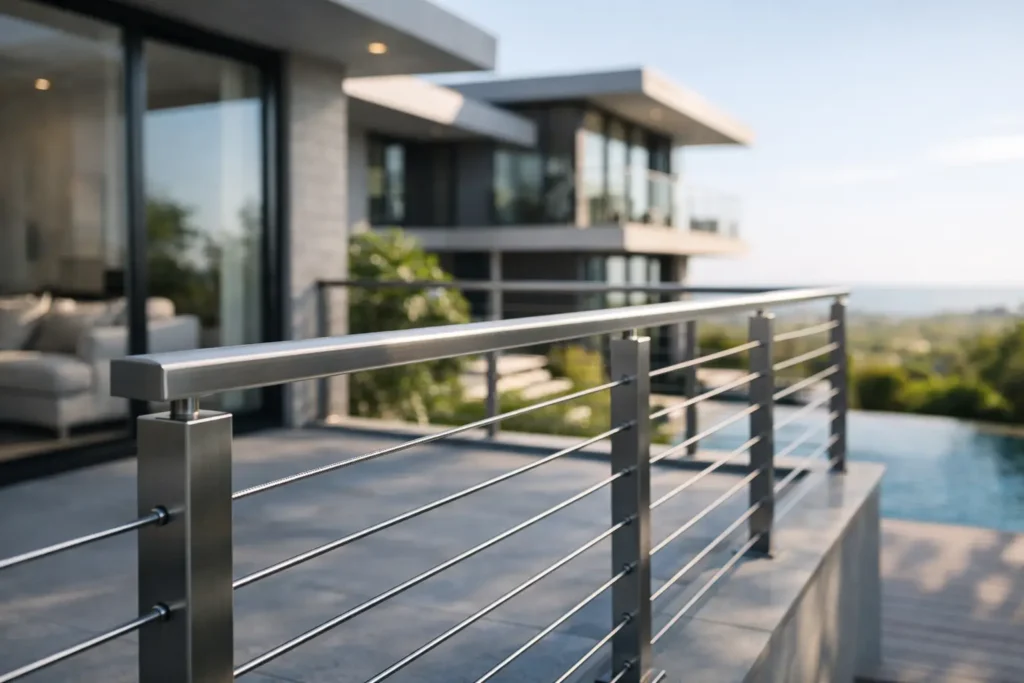
Horizontal steel bars create a more linear, architectural appearance and work well beside modern facades, aluminum windows, and clean-lined gates. However, the design needs careful consideration for homes with young children, as horizontal members can be more climbable. A professional fabricator will assess the intended use before recommending a layout.
Glass and Steel Combinations
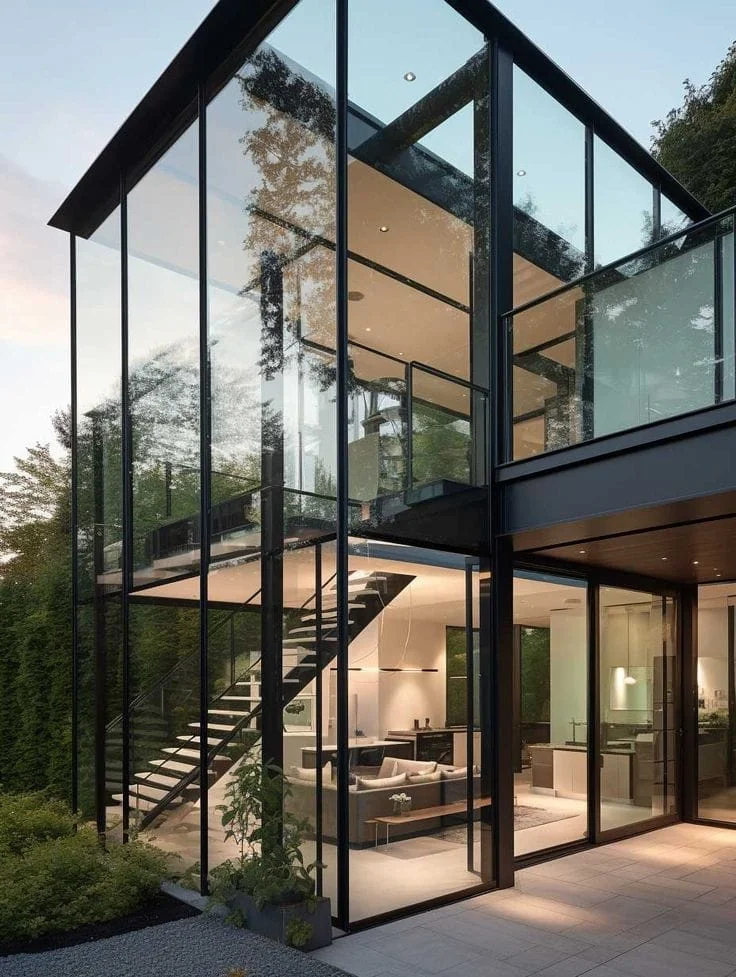
Steel posts and handrails paired with tempered glass are ideal when the priority is an open view. This combination is popular for double-volume staircases, balconies, terraces, and commercial interiors because it lets natural light move through the space while the steel frame provides a strong visual outline.
Glass railing systems require precision. Panel sizes, fixing points, edge finishing, drainage, and handrail support all need to be coordinated before installation. A poorly planned system can look elegant on day one but develop movement, water marks, or alignment issues over time. Proper fabrication and site measurement make the difference.
Cable, Mesh, and Laser-Cut Infill Panels
For projects with a more specialized design direction, steel frames can support cable infill, expanded metal mesh, perforated sheets, or laser-cut panels. These options suit mezzanines, stair voids, warehouse offices, cafés, and modern residences that need a stronger architectural statement.
Laser-cut panels can introduce privacy and pattern without closing off a space completely. Mesh infill delivers a practical industrial aesthetic and can be a durable option for commercial or factory applications. These details work best when the panel design, frame thickness, and fixing method are engineered as one system rather than selected separately.
What Makes a Safe Steel Railing System
A visually attractive railing is not automatically a safe one. Performance starts with the structural connection to the building. Posts may be fixed to concrete, steel stringers, wall brackets, or floor plates, and each condition requires a suitable anchor, weld detail, and base-plate arrangement.
Handrail height, infill gaps, load resistance, and edge protection should be planned according to the project’s applicable requirements. Residential stairs, public access areas, and industrial platforms can have different safety demands. A stair railing in a private home may prioritize a slim hand-feel and elegant finish, while a factory mezzanine needs a heavier-duty system designed for continuous use and clear fall protection.
Welding quality matters just as much as the drawing. Clean, consistent welds support the structure and create a better finish after grinding and coating. Weak joints, uneven post alignment, or rushed installation can make even premium materials look poor. Precision site measurement and experienced installation are essential, especially where floors, walls, or stair treads are not perfectly level.
Choosing the Right Finish for Indoor and Outdoor Use
The finish protects the steel and defines its final appearance. For mild steel, powder coating is a popular choice because it provides a durable, even surface in colors ranging from matte black and charcoal gray to white, bronze, and custom architectural shades. Matte black railings remain a dependable choice for modern homes, particularly alongside timber, concrete, stone, and aluminum-framed glazing.
For exterior work, surface preparation should never be overlooked. Steel needs proper cleaning, treatment, priming where specified, and coating coverage across welds, corners, and concealed areas. Malaysia’s heat, heavy rain, and humidity can expose weak finishing quickly, especially on balconies, open staircases, gates, and rooftop areas.
Galvanizing may be appropriate for steel exposed to harsh weather or moisture, although its appearance is more industrial and may not fit every interior or premium residential project. Stainless steel provides excellent corrosion resistance, but it still benefits from routine cleaning. Fingerprints, water spots, and airborne contaminants can affect the appearance of brushed or mirror-finished surfaces if they are left unattended.
Design Details Worth Deciding Early
Railing work often runs into avoidable delays when it is treated as a final-stage item. The best time to plan it is before flooring, wall cladding, glass, lighting, and staircase finishes are fully complete. That gives the project team time to confirm levels, fixing locations, handrail returns, and any concealed reinforcement required beneath tile or stone.
Consider how the railing meets the first and last stair tread, where it terminates at walls, and whether the handrail should continue around a landing. These small decisions affect comfort, safety, and visual continuity. On a glass-and-steel system, it is also useful to decide early whether the handrail will sit above the glass, return into a wall, or connect into a vertical steel post.
Color coordination deserves the same attention. A black steel railing can tie together window frames, slim-profile doors, trackless gates, awnings, and ceiling details. In a commercial project, matching metal finishes across shopfronts, partitions, stairs, and feature screens creates a more intentional identity than treating each item as a separate purchase.
Custom Fabrication Delivers a Better Fit
Off-the-shelf railing sections may appear convenient, but they rarely account for the actual geometry of a site. Custom fabrication allows post spacing, frame proportions, handrail profiles, and mounting methods to be tailored to the staircase or balcony. It also avoids the awkward filler pieces and inconsistent angles that can result from forcing standard components into a nonstandard space.
For renovation projects, custom work is particularly valuable. Existing homes often have uneven concrete, altered stair layouts, narrow landings, or finishes that demand careful protection during installation. A fabricator who can measure, design, manufacture, and install under one coordinated scope can reduce handover problems between trades.
Home Alloy Design & Engineering Work delivers this integrated approach for residential, commercial, and industrial projects across the Klang Valley. From made-to-order mild-steel stair railings to stainless steel, glass, and feature-panel systems, each installation can be developed around the site, the required function, and the intended architectural finish.
Keep Steel Railings Looking Their Best
Maintenance is straightforward when the correct material and finish have been selected. Indoor powder-coated railings generally need only regular dusting and occasional cleaning with a soft cloth and mild soap solution. Avoid abrasive pads or harsh chemicals that can dull the coating.
Outdoor railings should be inspected periodically for chipped coating, scratches, rust staining, loose fixings, and water trapped around base plates. Addressing a small paint break early is far easier than repairing corrosion after it spreads beneath the finish. Stainless steel benefits from wiping away rain residue, hand marks, and construction dust, particularly after nearby renovation work.
A well-designed railing should feel almost invisible in daily use: secure under the hand, aligned at every level, and visually suited to the architecture around it. When the material, connection details, and finish are specified with care, it becomes a lasting part of how a building looks, moves, and protects the people inside it.