
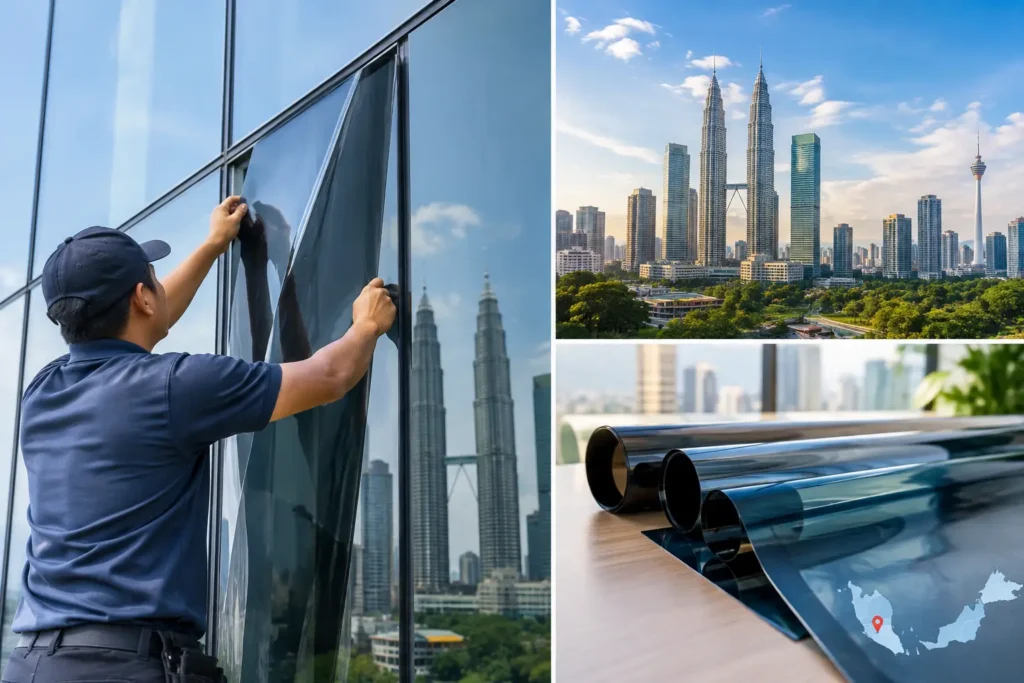
A west-facing glass wall can turn a Puchong living room or Shah Alam office into the hottest part of the building by mid-afternoon. The issue is not simply that sunlight enters the room. Solar radiation passes through the glazing, warming floors, furniture, walls, and the air-conditioning load behind it. Solar control films can reduce glare and solar heat gain, but their value depends on the existing glass, facade orientation, room use, and the building owner’s expectations.
For homeowners planning a bungalow extension, architects specifying a commercial shopfront, or developers coordinating a glass-heavy facade, film should be assessed as part of the whole glazing decision. It may be a practical upgrade for an existing installation. For a new project, however, the aluminum frame, glass specification, drainage details, and installation sequence deserve equal attention.
What Solar Control Films Do
Solar control films are thin, professionally applied layers designed for glass surfaces. Depending on the product specification, they can reflect or absorb part of the sun’s heat, reduce visible glare, filter ultraviolet exposure, and add a degree of daytime privacy. They are commonly considered for large fixed windows, shopfronts, office partitions exposed to direct sun, skylight glazing, and sliding or folding door systems.
The key performance figures are visible light transmission, solar heat gain reduction, glare reduction, and ultraviolet rejection. A darker film may cut glare more aggressively, but it also changes the appearance of the facade and reduces natural daylight. A highly reflective external look may suit a commercial elevation but feel out of place on a private residence in Bangsar or Damansara Heights.
Film is not a substitute for correct window design. If the opening has poor perimeter sealing, insufficient monsoon drip channels, or improperly aligned glass dampening gaskets, reducing solar heat will not solve water entry or wind-driven rain issues. Those are fabrication and installation matters that need to be addressed at the glazing system level.
When Solar Control Films Make Sense
Film is often worth considering when an existing glazed area is structurally sound, visually acceptable, and difficult to replace. A completed office in Subang Jaya with a strong afternoon glare issue, for example, may benefit from an appropriate film specification without removing the entire shopfront or curtain-style glazing.
It can also help rooms where direct sun creates discomfort rather than just higher air-conditioning use. Home offices, meeting rooms, bedrooms, display areas, and stair landings with extensive glass can suffer from screen glare and uneven indoor temperatures. In these situations, a film with balanced heat and light control can improve usability while retaining a bright interior.
New construction calls for a more careful comparison. If custom aluminum windows or slim-profile aluminum glazing are already being fabricated, it may be more sensible to specify suitable glass from the start. The right glass build-up can provide solar control while preserving the intended facade color, daylight level, and external appearance. Film remains an option, but it should not be treated as an automatic add-on.
Orientation Changes the Recommendation
A facade facing west or east usually receives lower-angle direct sunlight, which can create intense glare and heat at the times occupants are most likely to use the space. South-facing and north-facing exposures in Malaysia may receive different patterns of diffuse light, reflected heat, and seasonal sun depending on surrounding buildings and roof overhangs.
A site visit should consider neighboring structures, tree cover, balconies, awnings, and the glass area itself. An ACP awning or properly designed overhang can block direct sun before it reaches the glass. That approach can be especially effective on a new residential elevation because it also protects openings from driving rain. Films work on the glass; external shading manages the sun before it enters the building.
The Trade-Off Between Heat Reduction and Daylight
The most common mistake is selecting the darkest-looking film in the hope that it will produce the coolest room. Darker is not always better. It can make interiors feel enclosed, alter the view outside, and require more artificial lighting during cloudy periods. It may also affect the visual consistency of doors, windows, and adjacent glass panels.
For a home with powder-coated aluminum casement windows, a neutral film can sometimes keep the elevation looking clean while reducing a reasonable amount of glare. For a retail shopfront, the decision may be different. Merchandising visibility, brand colors, interior lighting, and the desired street presence all matter.
Privacy is another area where expectations should be realistic. Reflective solar control films can offer daytime privacy when the exterior is brighter than the interior. At night, once indoor lights are on, the effect can reverse. Bedrooms, bathrooms, and private meeting rooms may need a different glazing approach, layout solution, or screen treatment rather than relying solely on solar film.
Check Glass Compatibility Before Installation
Not every film can be applied to every glass type. Solar absorption can increase the temperature difference across a glass pane. If the glass, edge condition, size, framing restraint, or film type is unsuitable, thermal stress may become a concern. This is particularly relevant for large panels, certain insulated glass units, laminated glass, tinted glass, and skylight applications.
The glass supplier’s compatibility information and the film manufacturer’s specification should be reviewed before work proceeds. The installer needs to identify the existing glass type where possible, assess panel condition, and account for any previous coatings or treatments. A generic recommendation based only on window size is not sufficient.
For new aluminum glazing, the frame design still carries its own responsibilities. Glass must be correctly sized and supported, setting blocks must be properly positioned, and gaskets must maintain even pressure without pinching the glass. Sliding, folding, and casement systems also need proper alignment, multi-point security locking where specified, and drainage paths that remain clear during monsoon rain.
Skylights Need Extra Attention
Skylights are exposed to concentrated sun, rain, and heat from above. A film can reduce glare beneath a skylight, but access, glass type, slope, edge detailing, and roof interface all need assessment first. On a project with PU metal deck roofing, the flashing, roof fall, and connections around the skylight must manage water correctly before any internal comfort measure is considered.
For some projects, combining the correct skylight glass with external shading or a well-planned roof overhang will deliver a more balanced result than relying on film alone. The preferred solution depends on the architectural intent, usable ceiling height, and maintenance access designed into the new build.
Solar Film and New Architectural Metalwork
A well-performing facade is a coordinated system. The glass must suit the sun exposure. The aluminum frame needs adequate section sizing for the panel weight and wind exposure. Fixings must transfer loads back into the structure without distortion, while perimeter seals and drainage details control rainwater.
This matters for more than windows. Glass partitions near bright perimeter glazing may need glare planning. Aluminum folding doors opening to a pool deck can benefit from thoughtful shading and glass selection. Steel extensions with wide glazed elevations need the structural steel framing, bracing, and opening dimensions coordinated before aluminum fabrication starts.
At Home Alloy Design & Engineering Work, new custom aluminum doors, windows, shopfronts, glass systems, ACP awnings, PU metal deck roofing, and structural steelwork are planned around the actual site condition rather than a one-size-fits-all layout. For projects in Puchong, Putrajaya, Cyberjaya, and across Selangor and Kuala Lumpur, this coordination helps prevent late changes when glass, steel, roofing, and facade finishes meet on site.
Questions Clients Commonly Ask
Can solar control films make a room cooler?
They can reduce solar heat entering through glass, particularly on exposed facades. The actual result depends on glass area, orientation, air-conditioning capacity, roof heat, shading, and the film specification.
Are solar control films suitable for every window?
No. Existing glass type, pane size, condition, and exposure should be checked first. Compatibility is particularly important for large panels, specialty glass, and skylights.
Is film better than specifying solar-control glass for a new project?
It depends on the design stage. Film can be practical for completed glazing. When fabricating new custom windows or doors, specifying the appropriate glass from the outset may provide a more integrated visual and performance result.
Can film provide complete privacy?
No. Reflective films generally provide stronger daytime privacy only when outside light is brighter. Nighttime privacy requires a separate design consideration.
For a new residence, shopfront, office, or extension with heat and glare concerns, start with the facade layout rather than a single product choice. Send your project location, measurements, photos, drawings, and required items through the WhatsApp widget, and our team will review the requirements and advise on the next step.